
Blog article
What is an ALR Projector Screen and Do You Need One?

You’ve invested in a great projector, switched it on mid-afternoon, and the picture looks grey and washed out. It’s one of the most common frustrations we hear, and it’s rarely the projector’s fault. The real issue is the light in your room bouncing off a screen that was never designed to handle it.
That’s where an ALR projector screen comes in. In this guide we’ll explain what an ALR screen is, how it works, when it’s worth the investment, and when it’s simply not needed.
What is an ALR projector screen?
ALR stands for ambient light rejecting. An ALR projector screen is designed to reflect your projector’s light back towards the audience while absorbing or redirecting light from other sources, like windows, downlights and lamps.
A standard white matte screen reflects light evenly in every direction. That’s great in a dark room, but it also means every bit of stray light hitting the screen gets bounced straight back at you. Blacks turn to grey, colours lose their punch, and contrast drops away.
How it works
ALR screens use a specially engineered surface, often made up of microscopic optical layers or angled ridges. Because your projector sits in a fixed position, the screen can be tuned to accept light from that angle and send it to your seating area. Light arriving from other angles, such as a window to the side or a ceiling light above, is absorbed or deflected away from your eyes.
There are a few main types:
- Angular reflective ALR works with standard throw projectors mounted at the back of the room or on the ceiling.
- Ultra short throw (UST) ALR, sometimes called a lenticular or CLR screen, is built for projectors that sit just below the screen. It rejects overhead light particularly well.
- Grey or high contrast screens are a simpler, more affordable option. They deepen blacks but offer less true light rejection.
Matching the screen type to your projector is essential. A UST screen paired with a ceiling-mounted projector won’t perform as intended.
When an ALR screen is worth it
An ALR screen earns its place in any room where you can’t fully control the light. That usually means multi-purpose spaces, such as:
- Living rooms and family rooms where the projector replaces a TV and gets used during the day
- Media rooms with windows or glass doors you’d rather not cover with blackout curtains
- Open plan spaces where kitchen or dining lights spill into the viewing area
- Rumpus rooms and entertainment areas used for sport, gaming and casual viewing with the lights on
In these rooms, an ALR screen can be the difference between a picture you only enjoy at night and one you can use any time. It also lets you keep some lighting on for comfort and safety, which matters when the room has to work for the whole family.
When you don’t need one
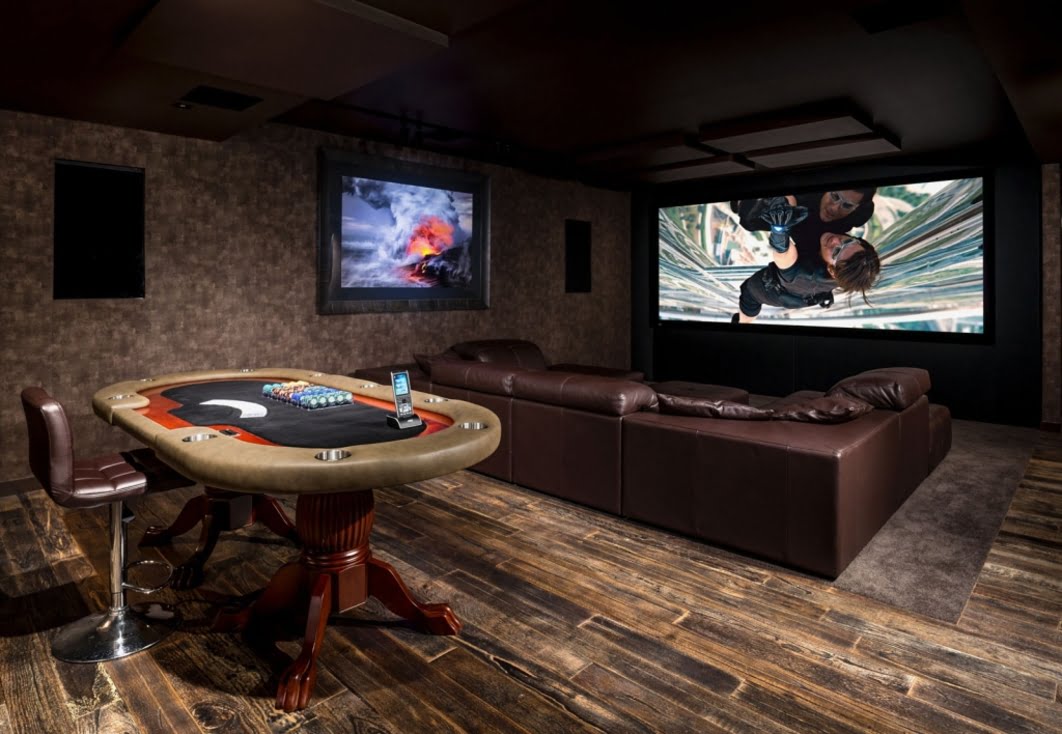
In a dedicated home cinema, an ALR screen is usually unnecessary. A purpose-built cinema room is designed to be light controlled from the start, with no windows or sealed windows, dark walls and ceilings, and lighting that dims fully during a film.
With no ambient light to reject, the ALR surface has nothing to do. In fact, a high quality white or acoustically transparent screen will often give you a brighter, more uniform image with wider viewing angles in a dark room.
That’s why most of the dedicated cinemas we design use screens chosen for image accuracy and sound performance rather than light rejection. The room itself does the work.
The trade-offs to consider
ALR screens solve a real problem, but they aren’t the right choice for every setup. Here’s what to weigh up.
Acoustic transparency
This is the big one for serious home cinemas. In a true cinema setup, the front speakers sit behind an acoustically transparent screen, so dialogue and effects come from exactly where the action is on screen. These screens use a fine woven or perforated material that lets sound pass through.
Most ALR screens are solid, rigid surfaces, so speakers can’t be placed behind them. Acoustically transparent ALR options do exist, but they’re limited and usually involve a compromise in either light rejection or sound clarity. If behind-screen speakers are a priority, a dedicated light-controlled room with an acoustically transparent screen is generally the better path.
Viewing angles
Because ALR screens direct light towards a specific zone, the image can look dimmer or less even from wide seating positions. This matters in rooms with wide rows or multiple seating areas.
Hotspotting and sparkle
Some ALR surfaces can show a brighter spot in the centre of the image or a faint sparkle texture, particularly on cheaper screens. Quality varies a lot between brands.
Projector placement
ALR screens are tuned to a particular projector angle and throw distance. Get this wrong and performance drops significantly, so the screen and projector need to be specified together.
Cost
ALR screens generally cost more than standard screens of the same size. In the right room the investment is worth it, but in a dedicated cinema that budget is often better spent elsewhere.
So, do you need an ALR screen?
A quick way to decide:
| Your room | ALR screen? |
|---|---|
| Living or family room used during the day | Yes, strongly recommended |
| Media room with windows you won’t black out | Yes |
| Open plan space with lights nearby | Yes |
| Dedicated cinema with full light control | Usually not needed |
| Room where speakers will sit behind the screen | Usually notChoose an acoustically transparent screen |
| Wide seating layout with several rows | Check viewing angles |
Frequently asked questions
Can an ALR screen make a projector look as good as a TV in daylight?
It gets much closer, especially paired with a bright projector. In direct sunlight a TV will still have the edge, but in a typical living room an ALR screen makes daytime viewing genuinely enjoyable.
Do ALR screens work with any projector?
No. ALR screens are designed for specific projector types. Ultra short throw projectors need a UST-specific screen, while standard throw projectors need an angular reflective screen.
Are ALR screens acoustically transparent?
Most aren’t. A small number of acoustically transparent ALR screens are available, but they usually involve some compromise in performance.
Is an ALR screen worth it in a dedicated cinema room?
Generally not. If the room is fully light controlled, a quality white or acoustically transparent screen will usually deliver a better result.
Get the right screen for your room
An ALR projector screen is a smart choice for multi-purpose rooms where light is part of everyday life. In a dedicated, light-controlled cinema, it’s usually better to put that budget towards an acoustically transparent screen and a fully immersive sound setup.
The best screen always depends on your room, your projector and how you plan to use the space. At The Digital Picture, we design complete home cinemas where every component works together. Explore our Cinema Collection or talk to our team about the right setup for your home.
Get startedMore articles


Scott Sauer
2 April, 2019
What is an acoustically transparent screen and why do I […]

Scott Sauer
26 October, 2023

Scott Sauer
21 April, 2021
Sony’s new flagship projector the VPL-GTZ380 has recently hit the residential market and it outshines its competitors.



After meeting with you, we develop exclusive designs that will maximise the performance of your home theatre system and complement your individual style. Our full suite of engineering, architecture, interior design and installation services streamlines the process, ensuring we are able to maintain your vision from first concepts through to completion.